5 min read
Claude Skills Have a Verification Problem
I traced 70 Claude Skills back to their GitHub repos and scored them on evidence. Here's what I found and how I shipped it with AI agents.

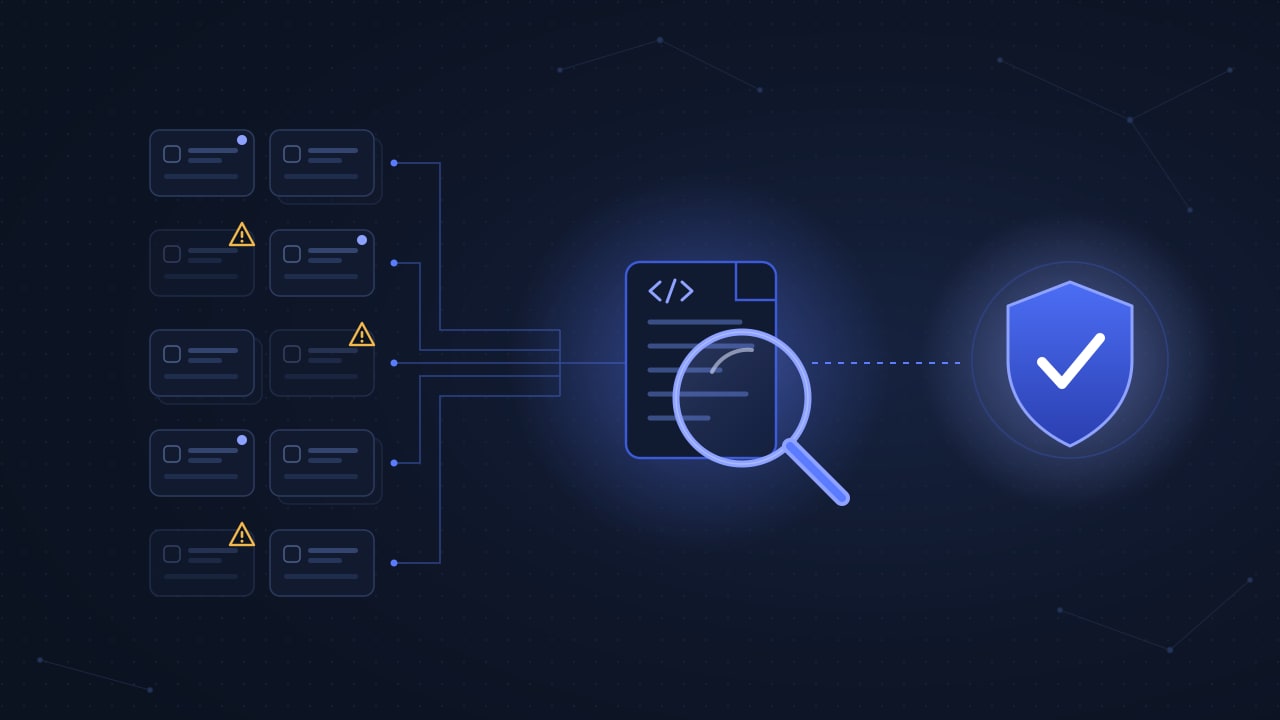
There are thousands of Claude Skills out there now. They’re listed in directories, marketplaces, “top 10” pages and GitHub topics. Finding skills is easy. Finding out whether one is any good is much harder. Who wrote it? Is this listing the original or a copy? Is it maintained? What will it do on your machine?
That last question matters more than it seems. A skill isn’t a bookmark. It’s a set of instructions, often with scripts, that an agent follows using your permissions. Installing a skill because a directory ranked it highly is the same habit as piping a random install script into your shell.
Advertisement
So I gave myself one rule: trust only what I can trace back to its source. Then I checked which skills still held up under that rule.
What I researched
I picked five places people actually go to find skills:
- claudeskills.info
- aitmpl.com
- the GitHub topic
claude-code-skills - marketing-skills.com
- claudecowork.im
I took 10 picks from each, which gave 50. I added 22 skills I researched on my own. After removing duplicates, 70 unique skills were left.
Three rules held for every pick:
- Trace it. Each listing was followed back to its original GitHub repository.
- Read facts from the source. Repo details came from the GitHub API, not from the directory’s own page.
- Run nothing. Nothing was installed or executed. This was a review of evidence, not a test drive.
How I scored
Every skill was scored out of 100:
| Criterion | Points |
|---|---|
| Usefulness | 25 |
| Quality | 20 |
| Maintenance | 15 |
| Adoption | 15 |
| Documentation | 10 |
| Compatibility | 10 |
| Security | 5 |
Points were given only for evidence I could find. If a repo said nothing about compatibility, it got nothing for compatibility. I didn’t give anyone the benefit of the doubt, and I didn’t fill gaps with guesses.
What I found
The directories turned out to be the weakest part of the whole system.
- Copies posing as sources. On one directory, 9 of the 10 picks were copies of other repositories. Two of those copies had fallen behind the originals. If you installed from the listing, you got an older version of someone else’s work.
- An “official-looking” site that isn’t official. One “Cowork” site is an unofficial fan site. The plugins it lists are Anthropic’s own. The content is real, but the branding suggests an authority the site doesn’t have.
- Malware bait. The GitHub topic contained malware-bait repositories with SEO-friendly names. Their names were built to rank in search, not to describe what the code does.
- The same skill everywhere. 8 skills appeared in more than one place. That makes a skill look more popular than it is, because it’s the same thing counted several times.
The takeaway: a directory is a pointer, not a source. It can help you discover a skill. It can’t vouch for it.
What I’d tell you before installing any skill
- Read it before you install it. Open the skill file and every script it ships with. If you can’t follow what it does, don’t give it your permissions.
- Install from the original repo, not a copy. Find out who actually wrote it. Copies fall behind the original, and sometimes they change in ways you won’t notice.
- Popularity is not safety. Stars, rankings and clever names can all be manufactured. Malware bait is made to look popular.
- Check who’s really publishing it. A site that looks official may be a fan project. Go to the vendor’s own repository.
- No evidence means no trust. If the docs don’t say what it does, what it touches, or whether it’s maintained, treat that as a “no,” not a “probably fine.”
The other half: 50 prompts
Alongside the skills review, I wrote 50 original prompts. They cover engineering, Claude Code workflows, business, marketing, research and design, plus 10 advanced playbooks. Every prompt is in English and has a full Arabic version. Arabic-speaking developers are a real audience, and they deserve more than an English-only reference with a translated cover.
How I built it
I used Claude Code with parallel research subagents. Each agent covered one slice of the research. The real design decision was making structured data the contract between research and publishing. Agents wrote structured records, not prose. Everything after that step was rendered from those records.
research agents (parallel)
  → JSON (one record per skill)
  → HTML (English + Arabic templates)
  → Chromium → PDF
  → PyMuPDF post-processing
  → QA
That split kept the two jobs separate. Research could be checked as data, and layout could be fixed without touching the research. QA included checking every link: all 183 of them.
What broke, and what fixed it
Arabic RTL in PDFs needs care. Right-to-left text works until a date or a line of code lands in the middle of a sentence and gets reordered. The fix was to isolate dates and code as left-to-right runs inside the Arabic text.
Footers nearly sank the project. My first approach stamped a footer onto each page, with embedded fonts. The result was a 1.6 GB file. Drawing the footer once as a shared object and reusing it on every page brought it down to 19 MB. Same output, a tiny fraction of the size.
The table of contents needs real page numbers. You don’t know which page a section lands on until the document is laid out. So the render runs twice: the first pass finds where everything lands, and the second fills those page numbers into the table of contents.
Design wasn’t an afterthought. I reused my own brand system: navy #0B1220, cobalt and periwinkle accents, Inter for text, JetBrains Mono for code, and IBM Plex Sans Arabic for the Arabic edition. Having a system already in place meant I spent no time debating colors.
What the scores don’t tell you
I want to be clear about the limits.
The scores judge documentation and repository evidence, not measured output. I didn’t run these skills, so I can’t tell you how well any of them performs on a real task. A well-documented skill can still produce mediocre results. A skill with a sparse README might be excellent. What a high score does tell you is that the evidence is there and the skill is traceable, documented and maintained. That’s a better starting point than a ranking, but it doesn’t replace reading the code and trying it yourself in a safe environment.
Get the handbook
The result is the Claude Skills & Prompt Engineering Handbook 2026, a 517-page bilingual reference:
AI agents made the research fast. The rules about what counts as evidence, and what doesn’t, are what made it worth trusting.